Written by Emekem Udom
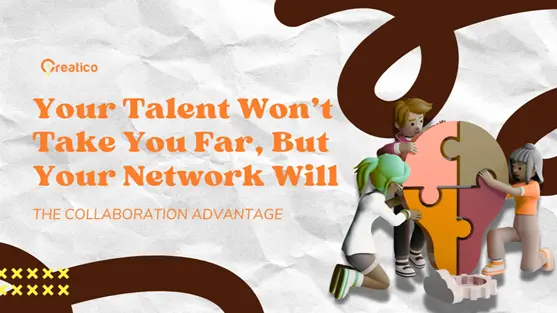
Every creative, whether you’re a songwriter, photographer, or architect knows that raw talent is only half the story. You might be brilliant alone, but to truly soar you need others on your side. In today’s creative world “it takes a village,” and building that village means linking up with fellow artists, producers, and mentors.
In fact, as one music industry veteran puts it, networking “has become a critical aspect of an artist’s journey not just for securing opportunities but for crafting a foundation of mutual support and growth”[1]. In other words, you can create your own luck with a strong network of collaborators.
At first that sounds intimidating: collaboration as an artist or designer can feel like giving up control or expecting magic. But when creatives link up, the results can be stunning. By joining forces you open doors to new skills, fresh ideas, and audiences you never knew existed.
A group brainstorm can spark breakthroughs no solo session ever could. Every time you collaborate, you connect with a whole new circle of people, and every one of those people may introduce you to even more opportunities.
Why Collaboration Matters for Creatives
Collaboration sounds nice, but why exactly is it such a game-changer for creatives? Here are a few powerful reasons:
- Broader Skillset and Creativity: Teaming up lets you tap into skills outside your own. A cinematographer might learn storytelling tricks from a screenwriter; a photographer might pick up lighting tricks from a videographer. One recent article notes that collabs let you “learn how music and sound effects transform storytelling,” for instance, when a videographer partners with a sound designer[2]. These cross-overs teach you new techniques and fresh ways of thinking.
- Expanding Your Reach: When you collaborate, their network becomes your network. Each new partner introduces you to their fans, clients, and colleagues. If you work on a joint music track or a magazine photoshoot, suddenly both artists are promoting the project to their followings. As a result, your work gets seen by twice as many people. This boost in visibility builds your credibility, because both you and your collaborator vouch for each other.
- Richer Portfolio: Collaborative projects often go beyond what you could do alone. For example, a graphic designer teaming with a copywriter can create a brand identity campaign much stronger than either could produce solo[3]. These standout portfolio pieces catch the eye of future clients or employers. Showing that you’ve contributed to a successful team project makes you look versatile and entrepreneurial.
- Fresh Inspiration: Stuck in a creative rut? A collaborator can shake things up. Bringing another perspective often leads to exciting new ideas. “Involving people with different backgrounds, experiences, and expertise often leads to unexpected breakthroughs,” notes a film industry blog[4]. Even casual chats with other artists can spark your creativity. When you bounce ideas off someone, you combine your imaginations. Often you get something neither of you would have dreamed up alone.
- Support and Mentorship: Collaboration isn’t just about the work; it’s also about support. Building relationships means you have people to turn to when challenges arise. For up-and-coming creatives, teaming up with experienced peers can be like getting an informal masterclass. Many filmmakers, for instance, started out learning from veteran crews and seeing how professionals solve problems on set[5]. Those relationships can last for years and become invaluable mentorships.
- Resilience in Tough Times: Creative careers are full of ups and downs. When obstacles hit, like a botched shoot, a tough client, a sudden creative block, you’re stronger with a team. On a film set, for example, weather or technical troubles inevitably pop up. But a tight-knit crew will rally with backup plans. The sound team might find alternative microphones, or the set designer might reimagine a shot, and together you salvage the scene[6]. In music or design projects, collaborations create the same safety net: if one plan falls through, your collaborator will help figure out “Plan B,” often leading to even better solutions.
In short, collaboration multiplies your creative mojo. It’s “the secret ingredient behind some of the most iconic projects,” as one creativity blog observes[7]. Whether designing an app, recording an album, or planning a photo series, the magic often happens in teamwork.
Real-World Examples from Creative Industries
You don’t have to take our word for it, history is full of famous creative partnerships. Here are a few inspirational examples from music, art, and architecture that show how collaboration can change the game:
- Beyoncé and Her Visual Team: Beyoncé’s 2016 album Lemonade wasn’t just a collection of songs; it was a full visual album. She worked with filmmakers, poets, cinematographers, and stylists (like Melina Matsoukas and Warsan Shire) to weave together music, film, and imagery into one powerful experience[8]. Each collaborator contributed their unique craft, poetry, cinematography, and costume design to make Lemonade a cultural phenomenon. The project redefined how music and visuals intertwine, and it only happened because Beyoncé built an extraordinary creative circle.
- Lady Gaga and Tony Bennett: Sometimes pairing artists from different genres creates a splash. In 2014, pop superstar Lady Gaga collaborated with jazz legend Tony Bennett on an album called Cheek to Cheek. The result was critically acclaimed and introduced Gaga to an older, jazz-loving audience, while Bennett’s classic sound found new fans through Gaga’s pop fame[9]. This unlikely duet showed how cross-genre collabs expand horizons for both parties.
- Pixar’s Collaborative Culture: In filmmaking, studios like Pixar have built their entire identity on teamwork. Pixar’s success is often attributed to its “culture that encourages interdisciplinary cooperation”[10]. Directors, writers, animators, engineers and even test audiences all share ideas openly. By nurturing those creative relationships, Pixar continuously pushes the boundaries of animation and storytelling. It’s a great example of how even large companies thrive by making collaboration a core value.
- Photography Teams: Photographers rarely work in complete isolation. A fashion photoshoot, for instance, is a coordinated dance of stylists, makeup artists, models, and designers. The Photography Business Institute emphasizes that photographers must network with other businesses to succeed. For example, building connections with event planners or ad agencies can lead to steady gigs. “Networking allows you to collaborate on new projects and build a successful career,” they note[11]. In practice, many photographers grow their careers by forming creative teams. Think of famous duos like Peter Lindbergh (photographer) and Linda Evangelista (model), whose collaborations defined 90s fashion.
- Architecture with Artists and Scientists: Architecture might seem solitary, but big projects demand diverse teams. A recent architecture blog points out that “every structure needs a designer, an engineer, a contractor, and, of course, the client”, each bringing vital expertise[12]. For example, the Wunderbugs installation in Rome was a collaboration between OFL Architecture and a team of specialists: a biologist, a composer, and a sound engineer[13]. Together they created interactive insect habitats that translate environmental data into music. Likewise, Overland Partners collaborated with light-artist James Turrell to design the University of Texas Art Museum – the building itself became a canvas for Turrell’s installations[14]. These projects highlight how drawing in experts from other fields (biology, music, fine art) leads to innovative spaces that wouldn’t exist any other way.
These examples span genres and industries, but they share a lesson: the biggest creative leaps happen when talented people link up. Beyoncé’s team, Pixar’s writers, Gaga and Bennett, architects with artists. In each case, collaboration took an idea to the next level. And critically, these partnerships opened new doors: new audiences, new platforms, new experiences.
Building and Leveraging Your Creative Network
Collaboration is powerful, but how do you make it happen in your life? Here are practical, down-to-earth strategies to expand your network and start collaborating:
- Define What You Need: Before you leap into networking, know what you want. Are you looking for a mentor, a co-creator for your first album, or someone who can teach you the technical side of lighting? Be clear about your goals. If you can articulate your vision and what skills you need, it’ll be easier to find someone whose interests and abilities complement yours.
- Attend Events and Meetups: Nothing beats face-to-face connections. Go to industry workshops, creative conferences, gallery openings, open mic nights, film festivals, or whatever fits your field. These gatherings are full of like-minded people looking to make connections. For example, a photographer might join a local photo walk; a musician could try a jam session or songwriting workshop. Even local business and startup events can yield creative friends (designers, marketers, programmers) who can collaborate.
- Join Online Communities: Your network isn’t limited by geography anymore. Platforms like Behance, Dribbble, GitHub, or Bandcamp are full of creatives showcasing work and seeking partners. Social media is powerful too: Instagram, TikTok, Twitter, and even LinkedIn can be networking tools. Follow industry hashtags, leave thoughtful comments on other people’s work, and politely slide into DMs to say you admire what they do. Online communities like Creatico can also be gold mines.
- Contribute and Collaborate Freely: Sometimes the fastest way to get noticed is to give first. Offer your skills on a shared project without demanding payment right away, especially if you’re early in your career. For instance, a budding songwriter could write a couple of demo tracks and invite a singer friend to add vocals, splitting any future earnings. These kinds of side projects not only pad your portfolio, but they also show you’re proactive and ready to work. Traits that fellow creatives appreciate. Plus, your collaborator will likely return the favor or recommend you to someone else. Never forget to protect your contributions and interests in them as you give them freely.
- Embrace Diverse Perspectives: Don’t just network within your immediate niche. Engage with people from related or even completely different creative fields. A software designer and a sculptor might not seem like obvious partners, but cross-disciplinary projects often produce fresh ideas. As one creative networking article puts it, involving people from varied backgrounds “fosters innovation and growth” by exposing you to unique opportunities[15]. You might meet someone at a tech meetup who needs artistic input, or find a writer who wants to try photography. That’s how breakthroughs happen.
By combining these strategies, you weave a safety net of support and opportunity. Remember that building a network takes time, but each small step (attending an event, introducing two friends, replying to an email) compounds. And before you know it, you’ll have a circle of collaborators who are eager to team up on that next big idea.
Putting It All Together
Imagine you’re a singer-songwriter who writes amazing lyrics but struggles with production. You play at open mic nights and strike up a friendship with a local producer. One jam session leads to an informal demo together, which you then polish and release. Through that process, you’ve used your talent to create something great, but it was the collaboration and connection that made it happen. The producer now introduces you to a booking agent, and your next gig is twice as big.
Or picture an architect designing a community art space. Instead of working alone in the office, she invites a musician and a local artist to a brainstorming session (her network). They suggest adding a sound sculpture in the foyer and a mural program on the walls. The final project is richer and wins a design award for community impact. This is something she couldn’t have done without her collaborators.
These scenarios show the simple truth: Talent gets the project started, but relationships drive it forward. The more people you know, who share your creative spirit, the further your work will travel. As venture capitalist Dave Lu writes, building the right network “can increase your odds of success” so much that you effectively “create your own luck”[16].
In the end, creativity is deeply social. Our favorite songs, images, and designs often have many creators behind them. As such, nurturing relationships and collaborating is not a shortcut or betrayal of your individual talent but the very fuel that can launch that talent into success.
When we collaborate, we multiply inspiration and support. We turn I into we, and suddenly our combined network of talents can take us much farther than we ever could alone.
SOURCES
[1] Michael Arty. The Art of Networking in Music: How Building Real Connections Fuels a Sustainable Career. Medium. https://medium.com/@Michael_Arty_MPT_Agency/the-art-of-networking-in-music-how-building-real-connections-fuels-a-sustainable-career-6ebc86feadb2
[2] The Creative Collaboration Guide: Actionable Tips and Examples. Creative Lunch Club. https://www.creativelunchclub.com/b/creative-collaboration
[3] The Creative Collaboration Guide: Actionable Tips and Examples. Creative Lunch Club. https://www.creativelunchclub.com/b/creative-collaboration
[4] The Creative Collaboration Guide: Actionable Tips and Examples. Creative Lunch Club. https://www.creativelunchclub.com/b/creative-collaboration
[5] The Power of Collaboration in Filmmaking: Why It’s Essential for Success. Local Cinema Studios. https://www.localcinemastudios.com/post/the-power-of-collaboration-in-filmmaking-why-its-essential-for-success
[6] The Power of Collaboration in Filmmaking: Why It’s Essential for Success. Local Cinema Studios. https://www.localcinemastudios.com/post/the-power-of-collaboration-in-filmmaking-why-its-essential-for-success
[7] The Power of Collaboration in Filmmaking: Why It’s Essential for Success. Local Cinema Studios. https://www.localcinemastudios.com/post/the-power-of-collaboration-in-filmmaking-why-its-essential-for-success
[8] The Creative Collaboration Guide: Actionable Tips and Examples. Creative Lunch Club. https://www.creativelunchclub.com/b/creative-collaboration
[9] The Creative Collaboration Guide: Actionable Tips and Examples. Creative Lunch Club. https://www.creativelunchclub.com/b/creative-collaboration
[10] The Power of Collaboration: Examples of Successful Music Industry Partnerships. Cammo Network. https://www.cammonetwork.com/post/the-power-of-collaboration-examples-of-successful-music-industry-partnerships
[11] The Power of Collaboration: Examples of Successful Music Industry Partnerships. Cammo Network. https://www.cammonetwork.com/post/the-power-of-collaboration-examples-of-successful-music-industry-partnerships
[12] Leveraging the Power of Networking in the Creative Industry: Building Relationships for Success. Adapt the Canvas. https://www.adaptthecanvas.com/networking-in-the-creative-industry/
[13] Why Networking with Other Businesses is a Must for Photographers. Photography Business Institute. https://photographybusinessinstitute.com/why-networking-with-other-businesses-is-a-must-for-photographers/
[14] Creative Collaborations: 7 Remarkable Architectural Design Partnerships. Architizer Journal. https://architizer.com/blog/inspiration/collections/architecture-collaboration-1/
[15] Creative Collaborations: 7 Remarkable Architectural Design Partnerships. Architizer Journal. https://architizer.com/blog/inspiration/collections/architecture-collaboration-1/
[16] Dave Lu. Your Network Determines Success More than You Realize. Medium. https://medium.com/swlh/your-network-determines-success-more-than-you-realize-41a3e889ecea