Across Africa and the diaspora, a creative revolution is unfolding — but protecting creative work is now just as vital as creating it. From Afrobeat stars topping global charts to designers and filmmakers shaping the future — this is our time.
Yet, while creativity is booming, protection still lags behind. Too many African creatives post, publish, and perform without safeguarding their work, brand, or business.
In today’s fast-moving digital world, creative protection isn’t a luxury — it’s a necessity for survival and legacy.
Imagine a goldsmith in a small village crafting fine jewelry admired by all, yet never locking his workshop. One morning, everything is gone.
That goldsmith is today’s creative — posting songs, designs, and stories without registering or safeguarding them.
Your creativity is gold. Protect it like treasure.
Legal Protection: Your Invisible Shield in the Creative Economy
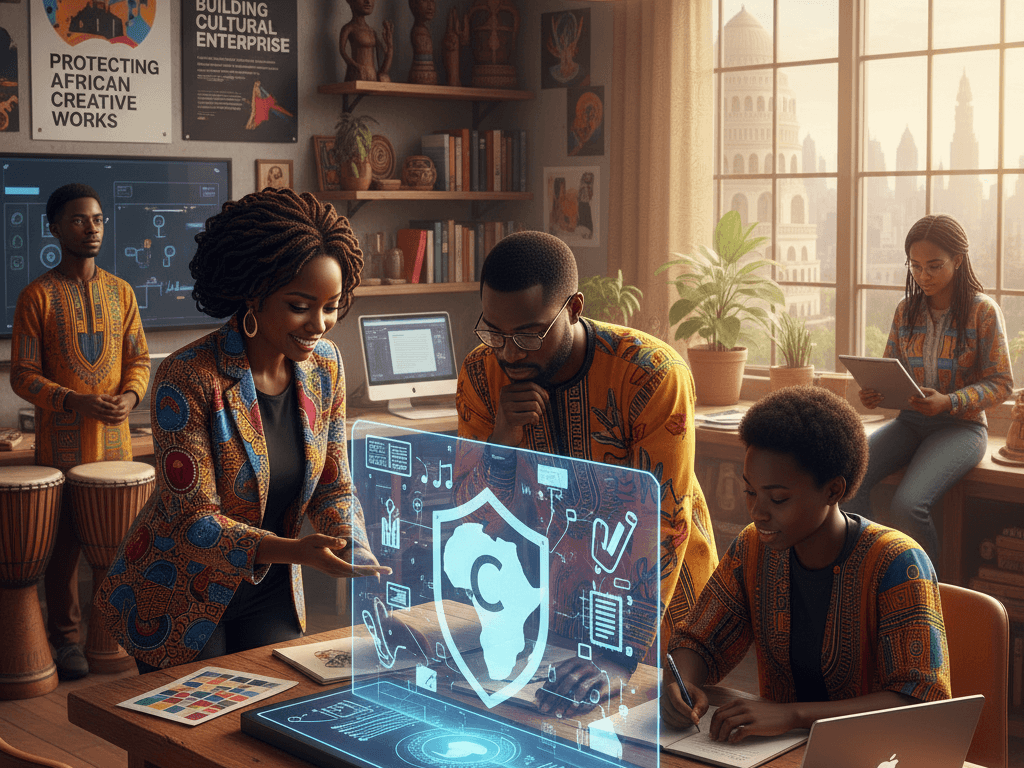
Legal protection ensures that what you create remains yours. Here’s what every African creative should know:
- Copyright protects your original works — music, art, writing, videos, photography, and software.
- Trademarks protect your name, logo, or brand identity.
- Contracts protect your relationships — gigs, brand deals, and collaborations.
You wouldn’t build a house without walls; don’t build a career without legal boundaries.
For Nigerian creatives, you can register your work with the Nigerian Copyright Commission (NCC), trademark your brand with the Trademarks, Patents and Designs Registry, and always back up collaborations with written agreements or NDAs.
At its core, protecting creative work begins with understanding how the law safeguards originality, ownership, and reputation.
Financial Protection: Systems Are Your Superpower
Financial systems are also a powerful way of protecting creative work for African creatives, because when your money is protected, your creativity can breathe.
Protecting what matters isn’t just legal — it’s financial.
You can’t sustain your creative vision if your finances are chaotic or survival-based.
Start small but start smart:
- Open a business account.
- Create simple systems for budgeting, invoicing, and payments.
- Learn your worth and charge for it confidently.
Financial protection gives you freedom. It means you can say “no” to exploitation and “yes” to aligned, well-paying opportunities. Sustainability is the best kind of defense.
Mental & Emotional Protection: Guard Your Peace Like Property
Let’s be honest — the creative grind can be brutal.
Deadlines, rejection, comparison, burnout — they’re all real.
But you can’t create from an empty cup.
Protect your peace the same way you protect your portfolio.
Set boundaries. Say no to toxic partnerships. Surround yourself with communities that value you, not just your talent.
Because protection isn’t only about paperwork — it’s also about preserving the person behind the work.
Ownership Is Power: Don’t Just Create, Claim
Here’s the truth many creatives learn too late: you don’t fully own what you don’t protect.
Ownership gives you leverage — it lets you control how your work is used, credited, and monetized.
Think about it:
- Fela’s music still earns decades later because his legacy was owned and protected.
- Chimamanda Ngozi Adichie’s words travel globally because her work is registered and respected.
- Trevor Noah built an empire not just through jokes, but through ownership of his story.
The new African creative must think like an artist and a strategist. Create boldly. Protect smartly.
Real Story: The Designer Who “Made It Too Late”
Tola, a Nigerian designer, posted her original sketches on Instagram. Within months, an international brand began mass-producing the exact designs. When she protested, they accused her of copying them — because she had no proof of ownership or registration.
By the time she gathered evidence, the trend had passed, and her chance had faded.
Tola didn’t fail because she wasn’t talented.
She failed because she didn’t protect her talent.
In today’s creative economy, receipts speak louder than tears.
Africa’s Creative Future Is Bold — But It Must Be Smart
From Lagos to Nairobi, from Johannesburg to Accra, African creatives are redefining global culture.
But for this movement to last, we must go beyond “blowing up” — we must build up legally, financially, and emotionally.
When you protect your creative work, you protect your voice, your culture, and your future.
Because creativity without protection is potential waiting to be stolen.
The Creative Protection Starter Pack
Here’s a quick-start checklist every creative should keep close:
- Register your work with your national copyright office or collective management organization.
- Trademark your brand name and logo — it’s your identity.
- Use contracts for collaborations and gigs — no exceptions.
- Watermark or timestamp your digital content.
- Keep digital evidence (email drafts, dated documents).
- Join a creative legal community — like Creatico — to learn and grow smarter.
Every step you take towards protection is a step towards longevity.
Final Thoughts: Protecting What Matters Is a Revolution
In a world that profits from African creativity but rarely protects it, every act of legal, financial, or emotional protection is revolutionary. The movement of protecting creative work for African creatives is a cultural revolution — one that ensures our stories, sounds, and symbols are not just heard but owned.
To protect your art is to declare:
“My ideas are valuable. My culture is not for free. My legacy will outlive me.”
So yes — create boldly. But also, protect smartly.
Because the future of African creativity doesn’t just belong to those who create the loudest — it belongs to those who protect the longest.
Frequently Asked Questions (FAQ)
Protecting your creative work is how you claim ownership of your story, your culture, and your income. In Africa, where many creative ideas get reused or uncredited, taking ownership ensures you’re respected, paid, and remembered.
Start by registering your work with the copyright office in your country. Then, always sign written contracts or NDAs before collaborations. Finally, watermark your visuals and use licensing terms for content you share online.
Yes! Keep drafts dated and stored safely (Google Drive timestamps work), send emails to yourself, and keep a private portfolio of early concepts. Legal registration comes next — but proof of authorship is key from day one.
Not always. Some African copyright offices are affordable. You can also start small — register your most important projects first. Platforms like Creatico offer legal support that’s affordable and tailored for creatives.
If your work has global potential, consider the WIPO copyright system or international trademarking. Partner with professionals who understand African and global IP laws to guide your next steps.
Learn More About NEXIFY Summit